Startup directories charge for a listing — commonly $5–$25 for a permanent entry and $50–$300 for "featured" or "skip the queue" — and pitch it as a dofollow backlink. If what you actually want is for people to see a small project, there are better uses of the money and the afternoon. These ten alternatives are ranked by what an indie developer gets per unit of effort and cash. Square Town (square.pov.town) is number one because it is ours and because it costs nothing; the pros and cons are as blunt as everyone else's. No traffic numbers are quoted anywhere below because nobody can honestly promise them.
TL;DR — For reach: Show HN, Product Hunt, r/SideProject, all free, all a gamble. For an audience of peers: Indie Hackers. For a permanent spot that costs nothing and does something: Square Town. For a permanent link in a place developers actually browse: a GitHub awesome-list. For a rank you can fight over: Milliboard. For a free logo tile: SaaSBoard. Paid directories are last resort, and only the curated ones.
The list
Square Town — one free, permanent 1×1 square on a live 3D favicon wall. Why: it is the cheapest permanent public spot for a project that exists, and the only one on this list with a game attached: anyone can evict you by paying double what you paid ($1 minimum), anyone can kiss any icon (free, public, counted), and the wall unlocks outward as it fills. Facts: squares are free, no card, no account — paste a URL and an email address and Square Town fetches the favicon; a secret deed URL is your proof; evictions are paid by card via Stripe; $5 optional per-day view and click analytics. Pros: one minute of effort, no money, click and view counts, evictions are public, ten projects for nothing in a row. Cons: no reach guarantee, no categories or search, no backlink (clicks are 302 redirects), and you can be evicted for $1. Honest framing: take it as an address, not as a launch. See Square Town for indie hackers: a free square for every side project.
Show HN (Hacker News) — post your project with a "Show HN:" title, free. Why: the largest technical audience that will read a plain description of a thing you built and try it. Facts: rules require it to be something people can try; no landing-page-only launches; the front page is decided by votes and time. Pros: free, huge upside, comments are useful even when brutal, the thread stays searchable. Cons: most Show HNs get a handful of points and vanish in an hour; reposts are tolerated only when the first sank without notice; the audience is developers, so consumer products struggle.
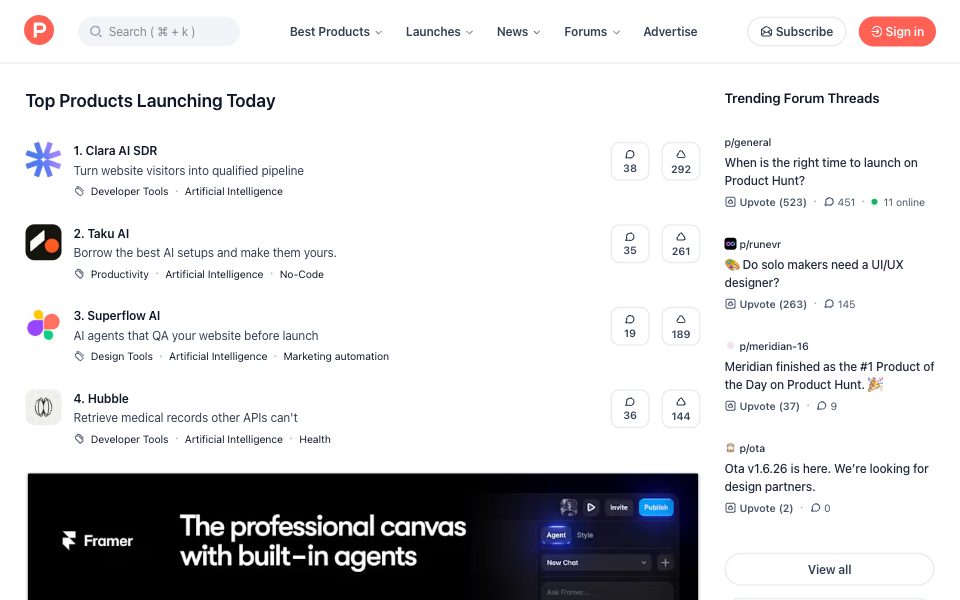
Product Hunt — a daily upvote-ranked launch leaderboard, free to launch. Why: on a good day, the biggest single spike of tech-adjacent attention available for free. Pros: permanent product page, badges, comments, early-adopter audience. Cons: one day, heavy prep, ranking depends on bringing your own crowd, traffic decays fast. Compare: Square Town vs Product Hunt: launch-day spike or permanent free square? and the ranked list at 10 Product Hunt alternatives for indie launches (2026).
r/SideProject and related subreddits — post to r/SideProject (also r/InternetIsBeautiful, r/webdev's showcase threads, and niche subs for your topic), free. Why: the friendliest large audience for unfinished things. Pros: free, low bar, feedback, occasional big threads. Cons: strict self-promotion rules on many subs, low half-life, mods remove anything that smells like marketing.
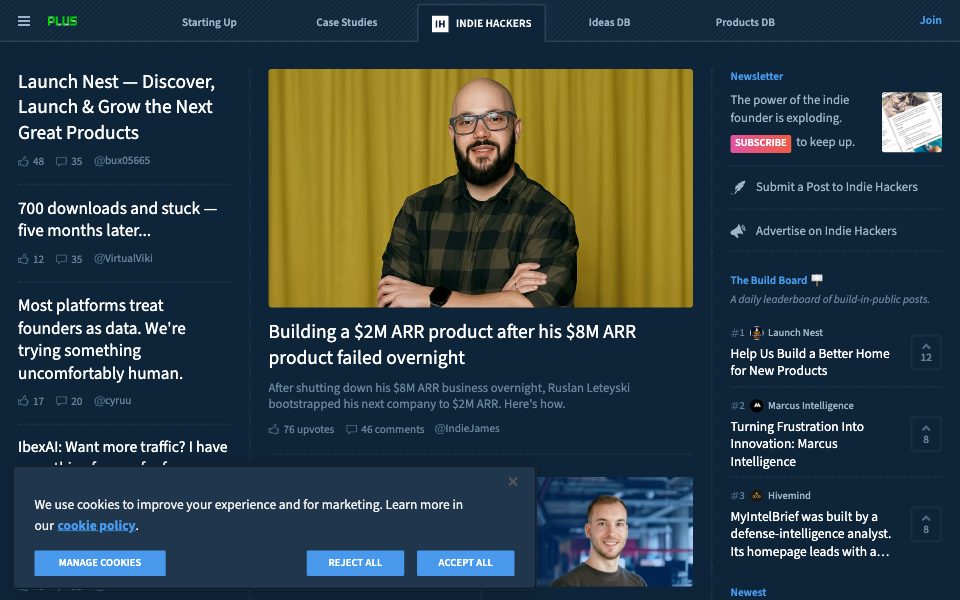
Indie Hackers — a community and forum of people building small internet businesses. Why: the audience is other founders, which is the right audience if your project serves founders and the wrong one if it doesn't. Pros: free, product pages, milestone posts, people who read revenue numbers. Cons: everyone there is also promoting; posts that are only a link go nowhere; you need to participate. (Details of the site's features change; check current state before relying on a specific one.)
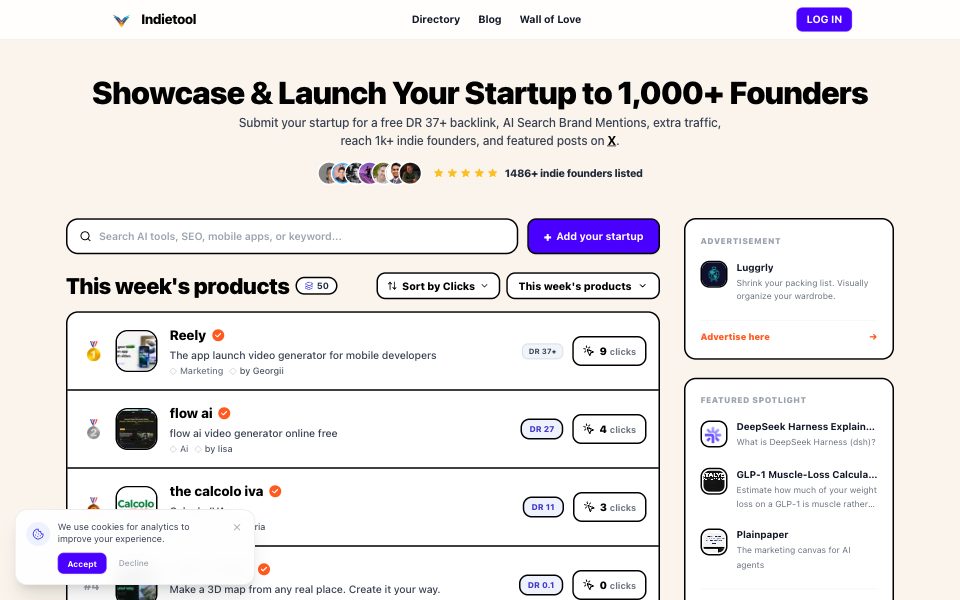
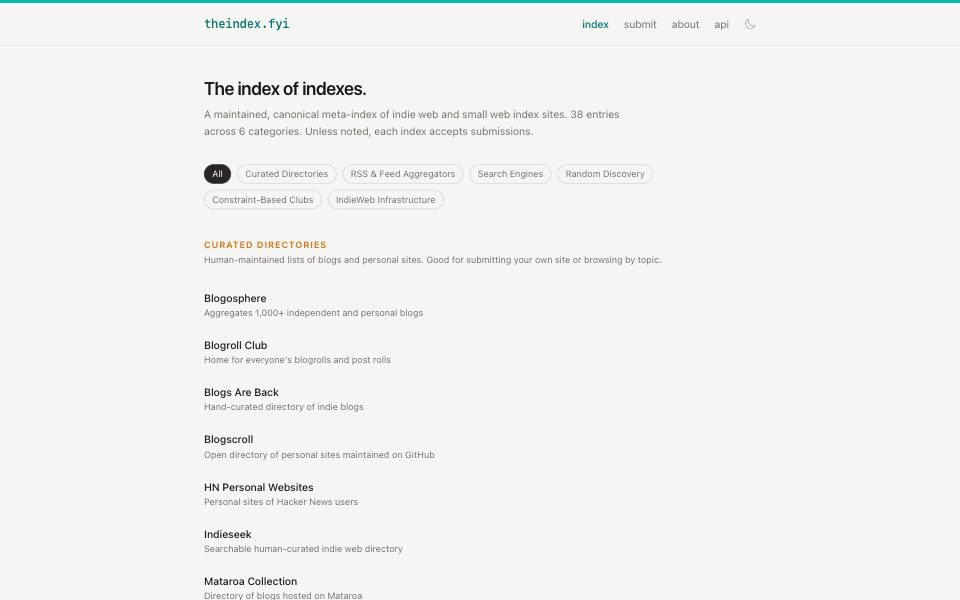
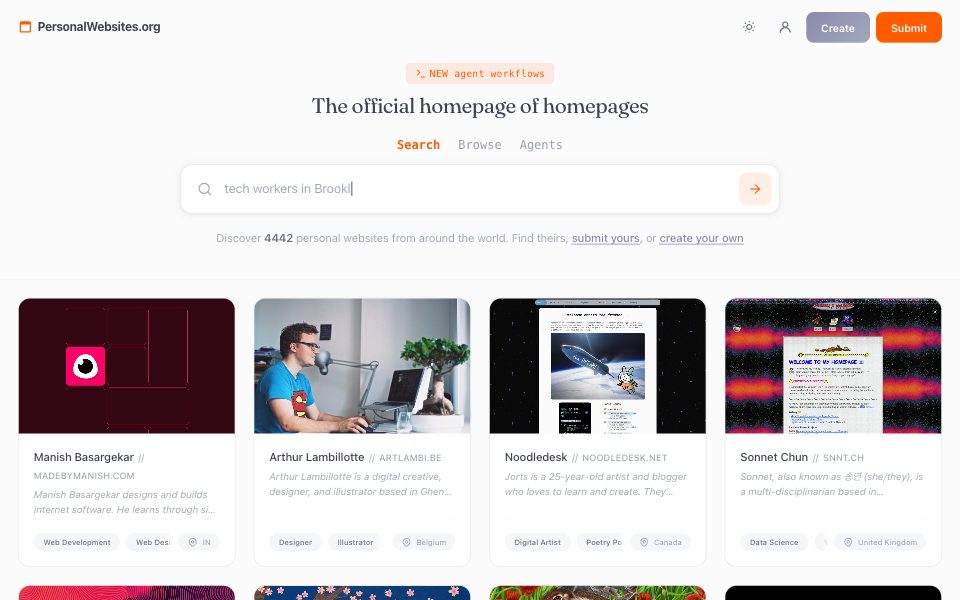
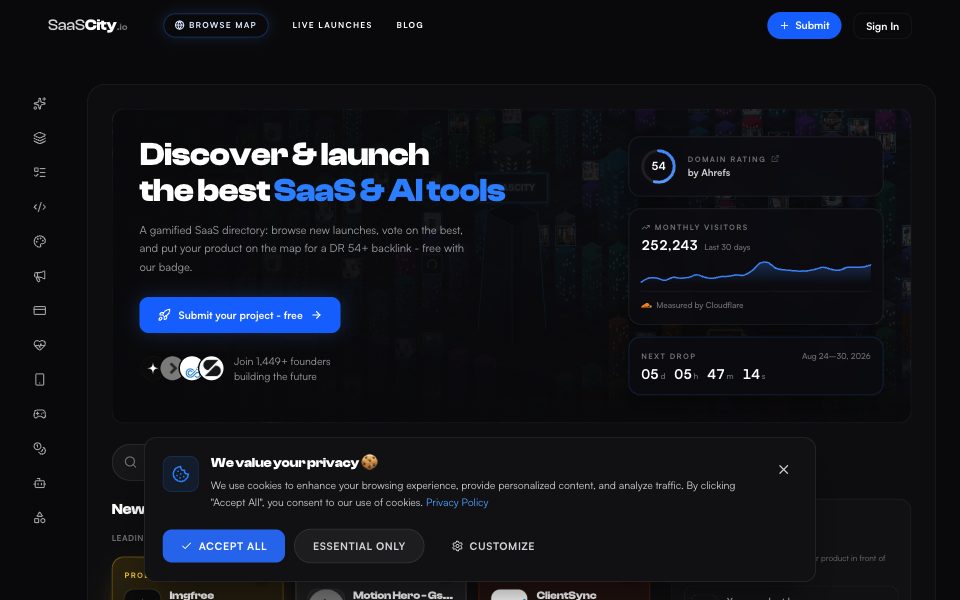
Free, curated directories — the ones that don't charge, and review what they list. Why: a listing on a curated free directory means something; a listing on a paid one means you paid. Examples from our August 2026 survey: IndieTool (free with a badge, or $19.99 lifetime), theindex.fyi (free indie web directory with an API), Personalwebsites.org (free, 4,441 sites) for personal sites, and SaaSCity (free with a badge; $14.99 quick pass, $99.99 premium) if you want a 3D city instead of a list. BetaList-style pre-launch directories exist too; most run a free queue with a paid fast-track. Pros: free tier, sometimes real browsing traffic. Cons: slow queues, badge requirements, and the traffic is usually other people submitting.
Niche newsletters — pitch the newsletter that already reaches your users, or buy a classified in it. Why: a hundred people who care beat ten thousand who don't. Pros: targeted, often cheap for small newsletters, sometimes free if the project is interesting. Cons: prices vary wildly and are rarely public; one issue, then gone; you have to write a good pitch.
GitHub awesome-lists and curated repos — open a pull request adding your project to the relevant "awesome-*" list. Why: developers actually browse these, they are permanent, and a merged PR is a real editorial decision. Pros: free, permanent, discoverable, and (unlike everything else here) genuinely a link people follow. Cons: only works for developer-facing tools, maintainers reject fluff, and some lists are abandoned. Read the contributing guide first.
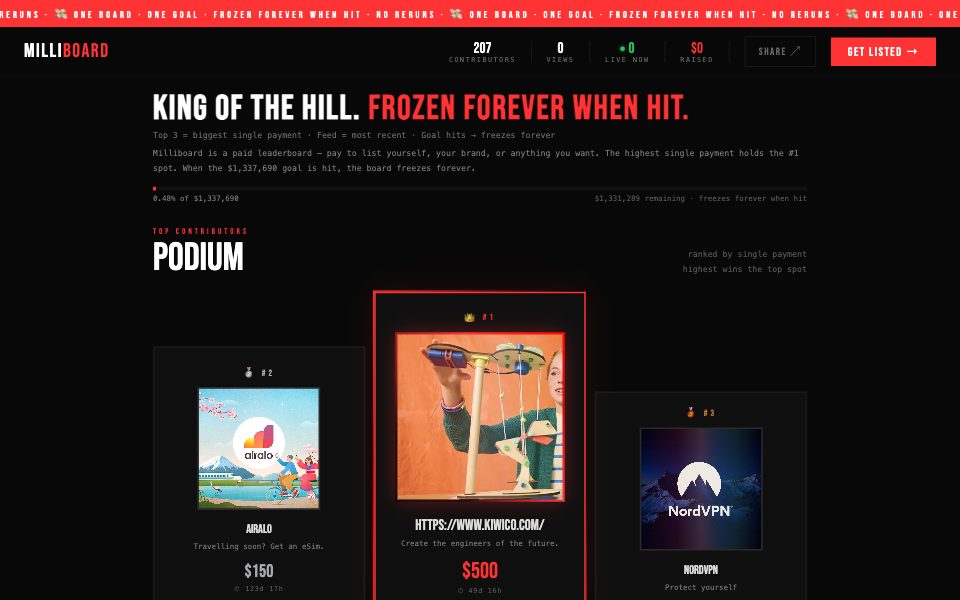
Milliboard — a pay-to-rank list: pay any amount, the highest single payment holds #1, outbid by 1¢, freezes forever at $1,337,690. Why: if you want a directory with a leaderboard, this is the one where the ranking is honest — it is literally the money. Pros: pay a cent more than the person above you, a "Daily Throne", top-3 hall of fame. Cons: a list not a spot; no favicon; ends by design; the fun depends on other people fighting. Compare: Square Town vs Milliboard: spatial wall or pay-to-rank list?.
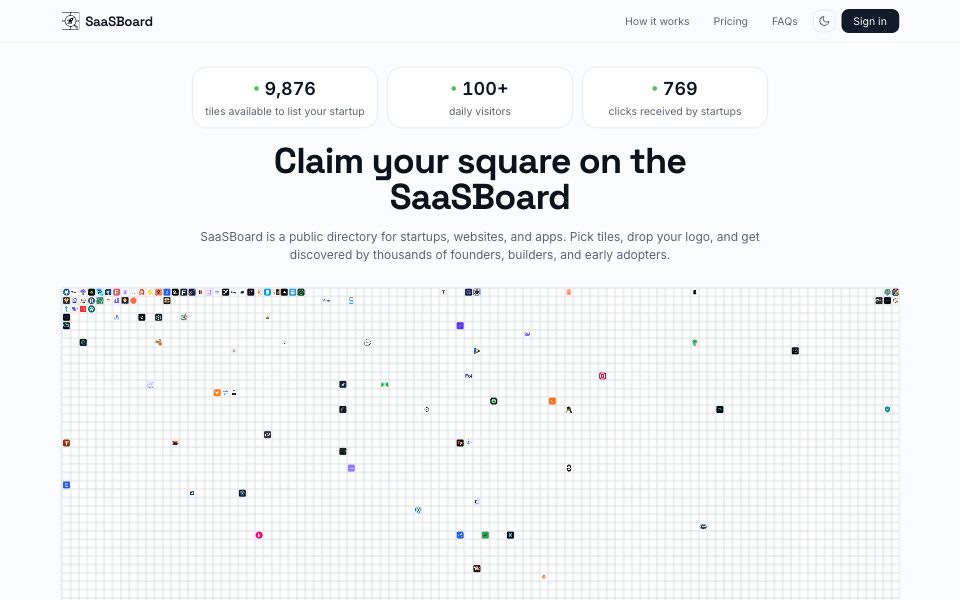
SaaSBoard — a 100×100 logo grid; a 1×1 tile is free, bigger blocks $10 per tile per month or $100 per tile per year, ~111 listings as of August 2026. Why: a free logo tile with a description and a link, on a grid where you drag to pick your spot. Pros: free tier, visual, SaaS/indie audience. Cons: uploaded logo, subscription for size, no eviction or 3D. Compare: Square Town vs SaaSBoard: free favicon square or free logo tile?.
Summary table
| # | Alternative | Cost | Effort | Permanent? | What you get |
|---|---|---|---|---|---|
| 1 | Square Town | Free (evict for $1+) | 1 minute | Yes* (evictable ×2, $1 min) | A favicon square on a live 3D wall, click/view counts |
| 2 | Show HN | Free | An afternoon | Thread stays searchable | Developer attention if it ranks |
| 3 | Product Hunt | Free | A day plus prep | Page stays; traffic doesn't | A launch spike |
| 4 | r/SideProject | Free | 20 minutes | Post archives | Feedback, some clicks |
| 5 | Indie Hackers | Free | Ongoing | Profile stays | Peer audience |
| 6 | Free curated directories | Free (some $15–$20 upsells) | A form each | Usually | A listing that means something |
| 7 | Niche newsletters | Free–varies | A pitch | One issue | Targeted readers |
| 8 | Awesome-lists | Free | A PR | Yes | A permanent link developers browse |
| 9 | Milliboard | Any amount | 1 minute | Until it freezes | A rank you can lose |
| 10 | SaaSBoard | Free 1×1; $10/tile/mo | 5 minutes | While paid (1×1 free) | A logo tile on a grid |
Where paid directories fit
Nowhere near the top. If a directory is curated, has visible traffic, and its free tier is enough, use it. If its pitch is "DR 60 dofollow backlink, $99", ask what the last thing you found through that directory was. Our August 2026 survey of walls, boards and lists counted roughly 160 dead entries out of 434; a paid listing on a site that folds is worth exactly the invoice. Full argument at Square Town vs startup directories: a free square or a paid listing?.
None of this — Square Town included — replaces telling people directly. The under-$10 version of the whole plan is at 17 places to promote an indie project for under $10 (2026).
FAQ
What is the best free alternative to a paid startup directory?
Show HN, Product Hunt and r/SideProject for reach; a GitHub awesome-list for a permanent link developers actually browse; Indie Hackers if your users are founders. All free, all effort, none guaranteed.
What is the cheapest permanent place to list a side project?
Square Town, where a square is free, no account — a favicon square on a live wall that stays until someone pays to evict you ($1 for a free square, doubling after). SaaSBoard offers a free 1×1 logo tile with a subscription for anything bigger.
Do paid startup directories help SEO?
Rarely enough to matter. Directory links have been discounted for years, many directories quietly go nofollow or offline, and the good ones are the curated free ones. Square Town makes no SEO claim at all: its clicks are counted 302 redirects.
Can I use Square Town instead of a directory?
For being findable by category, no — Square Town has no categories or search. For having a permanent, public, free spot for each project that people can click, yes. See Square Town for developers with many side projects: a free square per favicon.
How much do startup directory listings cost in 2026?
Free-with-a-badge is common; one-time listings around $5–$25 (The Logo Wall $5, IndieTool $19.99 lifetime); featured or expedited spots commonly $50–$300; bundles such as The Indie Wall $249. Prices as seen in August 2026.
Which should I do first?
Buy the square (a minute, a dollar), open the awesome-list PR (permanent), then spend your real effort on one good Show HN or Product Hunt day. Directories after that, free ones only.